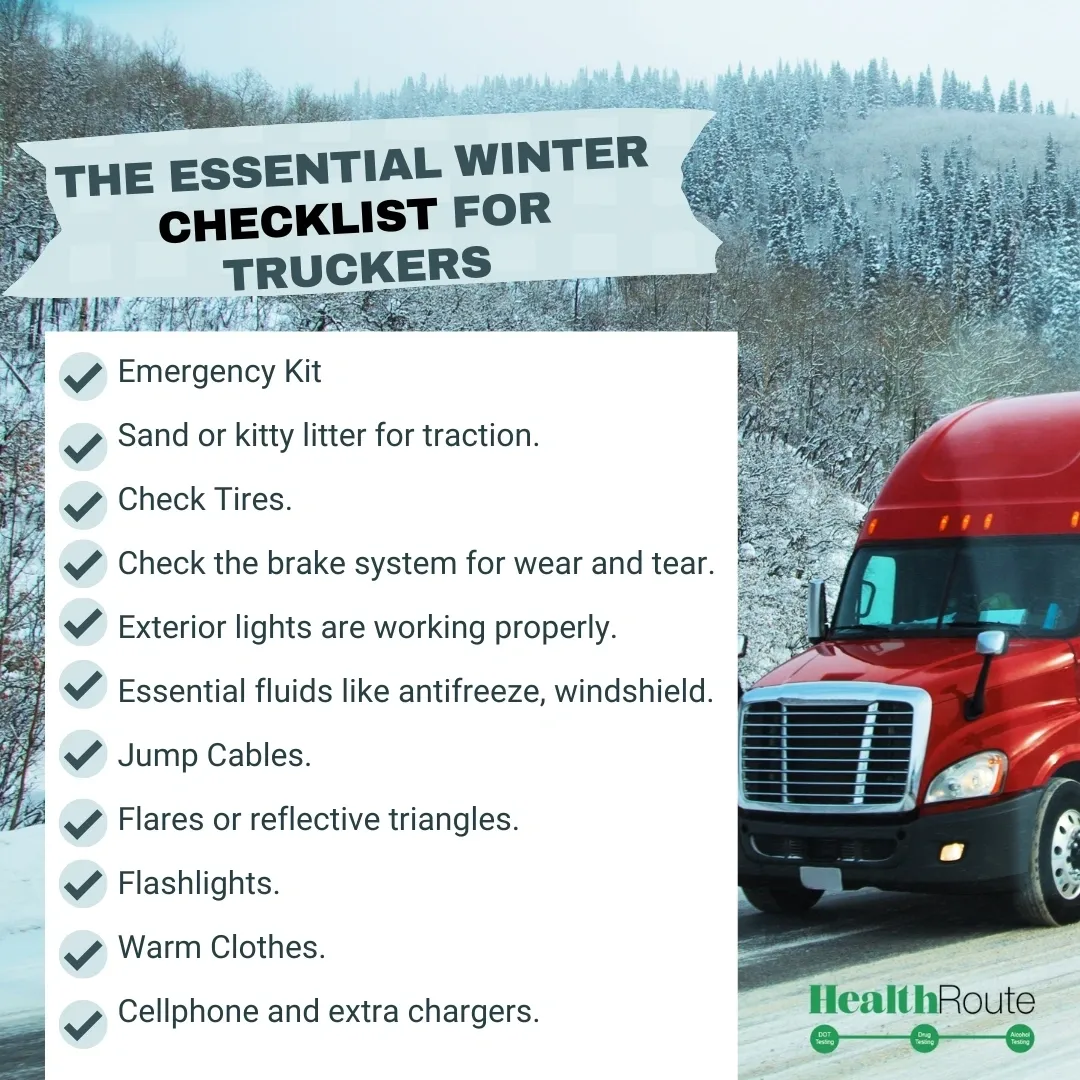
Owners of route vehicles can use this winter checklist to prepare their equipment, insurance, and stop plan for winter. For owner-operators, every winter is not a season but a stress test for the entire business. The cold weather, for instance, shows up the weaknesses tha
t are not there previously, such as weak batteries that run out on nocturnal hours, diesel fuel that gells unpredictably, and insurance gaps that occur only after the accident. Improper stop plans may also make routine parking a road safety issue. The winter checklist is not a nice-to-have or comfort upgrade but it is the only way to keep your business floor running, take care of cash flow and make it through the cold season with a profit.
In contrast to company drivers, owner-operators accept all obligations related to heavy equipment, the permit application processing period, claims, and recovery costs. Every winter casualty not only affects the whole company but impacts the overall revenue. Thus, winter truckization needs to be a well-structured solution that consists of three parts: equipment maintenance, insurance planning, and a reliable stop plan.
This article contains a real-life trucking winter checklist covering various scenarios, based on truck operator experience. Correctly preparing for winter changes the situation from a threat to a minor cost that can be controlled.
Why Winter Requires a Different Operating Mindset
Winter is not just an operational slow-down but also a risk multiplier for trucks. The chilling temperatures result in decreased performance of truck parts, which pushes the maintenance workload up and amplifies even small mistakes. What can be a trivial issue during the summer might turn into a complete breakdown during the winter.
Principal winter risk amplifiers are:
- Lower braking power and traction, which increases stopping distances, and places the road at risk.
- Regular cold starts and prolonged idling due to concealed leaks.
- Premature wear of batteries, air systems, and sensors.
- Restricted access to parking, fuel, and repair facilities.
- Slower recovery, even with minor mechanical problems at hand.
To owner-operators, the risks translate to higher costs, potential revenue loss, and the tactical and psychological burden they experience. The top winter checklist is the protection against unintentional oversights like missing fluid checks, improper battery care, or insufficient stop planning that at the end become unpaid downtime.
Winter Driving Safety: Introduction
Equipment Winterization Checklist: The Non-Negotiables
Winter equipment maintenance is not just a regular preventive maintenance; it is a survival maintenance. Commercial truck and heavy equipment operate under extreme stress in cold weather, where tolerances shrink and small inefficiencies escalate rapidly. Components that function “well enough” in warm months often fail outright once temperatures drop, turning minor defects into costly breakdowns.
In winter, equipment reliability determines whether a truck moves or sits. Cold starts strain engines, thickened fluids slow systems, and brittle materials are more likely to crack or leak. Deferred repairs that seemed harmless in autumn become emergency failures in January. This is why winterization must focus on eliminating marginal components, not just servicing obvious ones.
A proper winterization checklist forces objective decisions: replace parts early, verify cold-weather performance, and remove assumptions from maintenance planning. In winter trucking, equipment does not forgive optimism — it rewards preparation.
Lubricants and Fluids
Cold temperatures make fluids behave differently. Either the wrong viscosity or the degraded fluids can damage the pump and lead to system malfunctioning.
Fluid checks checklist:
- Winter viscosity rated engine oil
- Coolant tested for proper freeze protection
- Low-temperature-operating hydraulic fluid
- DEF checked for contamination or freeze damage
- Winter-grade washer and antifreeze fluids
One of the quickest ways to immobilize a commercial truck during winter is to skip fluid checks.
Diesel Fuel and Anti-Gel Protection
Diesel fuel is the main reason why winter breakdowns happen.
Fuel system checklist:
- Use the winter blend diesel whenever it is available
- Add anti-gel additives proactively, not just reactively
- Empty water separators regularly
- Switch the fuel filters before winter
Once the diesel gels, there is no chance left to carry out the operations; it completely stops.
How to Prepare Your Truck for Winter Weather
Battery Care and Electrical Systems
The cold greatly influences battery capacity.
Battery care checklist:
- Check battery load before winter
- Look for terminal corrosion
- Check alternator output under load
- Carry jumpers or a booster pack
- Inspect wiring for brittle insulation
A battery that “almost works” at fall won’t survive the winter.
Tires, Brakes, and Traction
Like the snow, rubber performance in cold conditions is a major influence on winter traction.
Tire inspections checklist:
- Check tread depth according to winter standards
- Inspect for uneven wear
- Check tire pressure regularly (cold lowers PSI)
- Check brake adjustments and moisture in the air system
- Carry chains where legal
Worn tires cause more stopping distances, increase claims exposure, and bring about insurance risk.
❄️ Winter Driving Tips for Truckers: Stay Safe on Icy Roads!
Block Heaters and Cold Starts
Block heaters are tools for productivity and not for comfort.
Cold-start checklist:
- Test block heaters before winter
- Inspect cords and connectors
- Plan overnight stops with power access
- Confirm operation of glow plug or intake heater
Cold starts that are unprepared lead to engine wear and decrease in equipment life.
Core Equipment Winterization Checklist
| Component | Winter Risk | Required Action |
| Engine oil | Thickening, hard starts | Use winter-rated oil |
| Coolant | Freeze damage | Test freeze protection |
| Diesel fuel | Gelling | Anti-gel additives |
| Batteries | Power loss | Load testing |
| Tires | Reduced traction | Winter tread & PSI checks |
| Block heaters | Engine wear | Test before cold season |
Cab Comfort and Safety Kit: Operational Readiness
CThe level of comfort in the cab has a direct influence on the alertness, fatigue, and decision-making abilities during winter operations. A cab lacking necessary facilities attracts mistakes, decelerating, and drivers’ unenlightened decisions toward unsafe.
Cold stress, dehydration, and poor sleep are quickly compounded during the driving of the long winter runs, and the situation is even more complicated with the impossibility of avoidance of such things as delays, road closures, and extended idling.
Having a proper winter safety kit and turning breakdowns into delays instead of emergencies is a good idea. The cab serves as a temporary shelter and workspace when the weather halts the movement. The space can be forgotten, and in a case of this kind, even a minor delay can become a major physical exhaustion, bad judgment, or unsafe tactics. The situation, in most cases, arises from operators being cold, tired, hungry, or mentally overloaded and not solely mechanical failure.
Essential items for cab comfort:
- Operational bunk heater
- Thermal blankets and winter clothes
- Extra food and water
- Flashlight, headlamp, spare batteries
- Ice scraper, shovel, traction aids
Besides the basics, cab readiness consists of moisture management, airing system, and organizational means. Liquid-filled shoes, fogged windows, and scattered controls lead to stress and delay reaction. Kept gloves dry, utilizing storage emergency gear is just at hand, and having unclouded windscreen, the factor affects road safety most.
Cab comfort is a man’s weapon against fatigue as well. Quality sleep in cold temperatures requires an even cabin temperature and proper insulation. If the situation is reversed, cab drivers, who have already depleted their energy, are likely to make mistakes in the first mile of driving.
Cab readiness isn’t about luxury- it’s about control. In winter trucking, comfort boosts concentration, discipline, and makes the right decision. Cabs that are well-stocked with the driver’s protection of both body and mind are kept safe thus driving at such a pace that means no accidents can be thrown in by delays, changes in the weather, or being told to stop for a few minutes.
User Mindset: A Winter Business is a Discipline a Driver is Facing with in a Cold Weather
Winter is not the form of punishment that truck drivers receive randomly – it is the weak system that shows. For the owner operators, almost every cold-weather issue involves something else rather than snow or ice. It is about the choices made some weeks before: the maintenance which was postponed, the unrealistic assumptions and conclusions, the incomplete insurance reviews, or the unrealistic stop plan.
The winter checklist is not just a static document that you would read once in October. It is the framework that is in operation, which puts together the reliable equipment, resilient insurance, and strict stop into one control system. When these components are functioning together, wintertime becomes foreseeable. When they do not, even the most insignificant problem may lead to downtime, claims, and losses.
Truck winterization doesn’t aim at risk elimination, just to be clear: it’s impossible. It’s the process of cutting down uncertainty. Owner-operators who are disciplined in approach to the winter procedures successfully mitigate repairs, claims, and cash flow issues, and feel secure when others have to park down the fleet.
In the case of trucking, optimism is not the thing to win. It is the strategy, the routine, and the discipline that rewards. Those who treat winter as a manageable operating condition rather than an exception are the ones who drive while others stay in the garage until the spring comes.
Mini FAQ
Is it at least good to have a winter checklist is it even necessary if the last winter the truck ran fine?
Of course, it is. Each winter is different, and equipment condition changes every year. Fluids age, batteries weaken, and insurance terms evolve. A checklist ensures a readiness based on today and not on guess.
What winter issue causes the most downtime for owner-operators?
The one that comes to mind is unattended fuel and electrical systems. Gelling diesel, dead batteries, and cold-start failures, respectively, cause 90% of the winter breakdowns – these problems can be resolved beforehand through action.
How does stop planning reduce winter risk?
The structured stop plan gives the driver a good way to avoid overnight fuel freezing, unsafe roadside parking, and lack of access to services. Many winter failures happen while parked, not while driving.
Is cab comfort really a safety factor?
Yes. Cold, fatigue, and discomfort degrade decision-making. Proper cab comfort supports alertness, reduces stress, and directly improves road safety during winter operations.