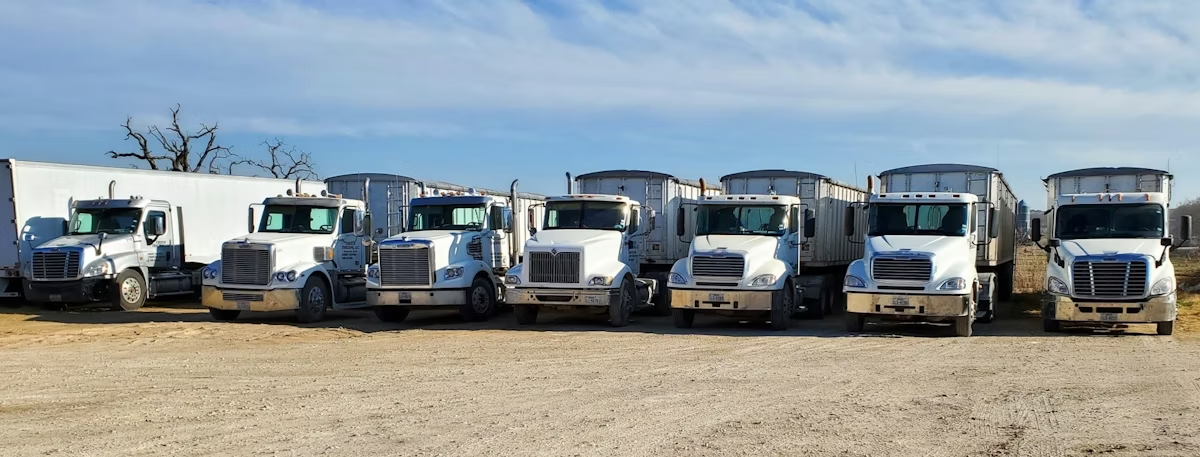
Managing a 3-10 truck fleet seems impossible. Having switched back from an owner-operator who could keep track and manage every job to an individual who is not that independent but at the same time does not have the scale, staff, or margins of a big carrier is not that easy. The main reason that many small fleets get into trouble is not that they have bad drivers or w
eak freight, but rather the management of their fleet is too casual, KPIs are obscure, and discipline is not steady.
For instance, small fleet management success is achieved more by simple elements than by complex ones. It is about having clarity, doing things that can be done repeatedly, and sticking to operational discipline. This article will provide you with the necessary know-how on fleet operation arrangements, the right KPIs to focus on, and the method of imposing discipline without deskilling the management into bureaucracy-all of these from a truck-driving-relevant and real-world perspective.
Experiencing challenges with managing 3–10 trucks that are More Real than You Think
1 truck becomes 2, and then 5, after which it becomes 8 trucks: small fleet development occurs, in this way. However, operating mainly on trust systems like phone calls, verbal agreements, and “I will remember it” that have worked for 1 or 2 trucks, collapses strictly at such a big scale.
Common failure points in small fleet operations consist of:
- No standardized fleet processes
- Reactive vehicle maintenance rather than preventive maintenance
- Lack of poor cost control and vague truck profitability
- Inconsistent driver behavior and weak accountability
- No real meaningful fleet KPIs beyond “gross revenue”.
Every mistake in this scenario bears a cost. A bad repair decision, a rogue driver, or somebody less skillful in management could cut the fleet income by several months. This is the case that structure is more important than dreams.
Core Principle: Set Processes as the First Priority Before the Trucks
Before doing any kpi discussions or software basics, small fleet management needs to start with the processes that are clearly defined. If you can not say a task simply, it is not at all controllable.
Every 3–10 truck fleet should create, write down, and make vocal, repeatable processes for:
- Load assignment
- Driver communication
- Vehicle maintenance and preventive maintenance
- Vehicle fuel management and fuel policy
- Regulatory compliance and documentation
- Incident response, claims handling, and risk management
The above-mentioned processes are not to be complicated, but they are to be followed consistently. The target is operating clarity, which is the clarity of asset management in a small fleet.
Example: Load Assignment Process

Rather than “dispatching by feel”, let’s establish rules:
- Minimum rate per mile or per hour
- Deadhead limits
- Driver hours-of-service buffer
- Priority lanes and customers
This approach gives dispatching a logical, humanly unemotional order, which improves vehicle capacity because every load is evaluated as the week’s total instead of one matter as a win.
Fleet Discipline: The Invisible Asset
Fleet discipline is that glue which makes small offerings unitary. Without that, KPIs become meaningless.
Discipline is to cover three dimensions:
- Drivers (behavior, safety, reporting)
- Vehicles (maintenance compliance, inspections, repair follow-through)
- Management (following their own rules consistently)
Fleet discipline does not imply strict control. It means continuity of behavior. Fleet sisc is what makes your fleet tracking data significant, as those numbers only count if actions follow.
When discipline is weak:
- Tasks get delayed
- Fuel efficiency suffers
- Safety incidents go up
- Downtime is prolonged
When discipline is strong:
- Costs level out
- Drivers are clear on what to expect
- Fleet tracking is accurate and gives actionable results
- Risk management is enhanced
The Most Important KPIs for 3–10 Trucks.
Fleet 101: Introduction to Key Performance Indicators (KPIs)
Tracking everything is impossible, while the absence of tracking anything is a suicidal act. Small fleet management must be concise and relatable KPI sets that reflect the state of reality.
Vehicle Cost Per Mile (CPM)
This is the most fundamental fleet KPI.
It entails:
- Fuel
- Maintenance and repair costs
- Tires
- Insurance
- Permits
- Depreciation
Not measuring a vehicle’s cost per mile means that you do not know profit levels. This KPI is centered on the total cost of ownership and lets you know if your decisions regarding asset management are correct or not.
Vehicle Utilization Rate
Vehicle utilization is the question addressed:
What is the amount of time that the truck is really generating revenue?
Measuring:
- Paid miles vs total miles
- Hours of revenue vs hours total
- Average downtime per truck per week
Underutilization usually points to:
- Poor scheduling
- Excessive downtime
- Weak dispatch processes
Improving vehicle utilization is often the quickest way to stabilize cash flow without seeking higher rates.
Downtime Prevention KPI
Downtime is the killer that controls small fleets when they are unnoticed.
Track:
- Unplanned downtime hours
- Preventive maintenance compliance
- Average repair turnaround time
Each idle truck consumes fixed costs without producing any revenue. When you do not track downtime prevention, “profit” tends to become delayed losses.
Fuel Efficiency KPI
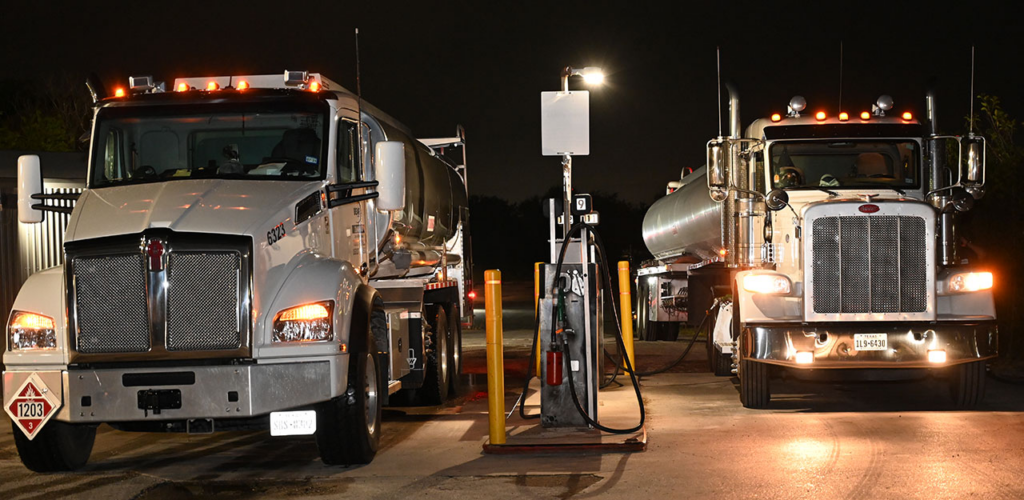
Fuel is the key variable cost, thus, fuel efficiency requires its own KPI.
Track:
- MPG (miles per gallon) by truck
- Fuel cost per mile
- Idle time
Fuel efficiency reflects:
- Driver behavior
- Vehicle condition
- Route planning discipline
- Vehicle fuel management policies
A fleet that shortens fuel efficiency and idling discipline often finds balance without changing lanes or customers.
Driver Safety Score
Small fleets unlike big carriers cannot absorb accidents.
Track:
- Speeding events
- Hard braking
- Safety violations
- Accident frequency
The driver safety score is connected with risk management, not just a compliance metric. It also protects relationships with shippers and insurers.
KPI Summary Table
| KPI | Why It Matters |
| Vehicle cost per mile | Determines true profitability and supports TCO decisions |
| Vehicle utilization | Shows asset effectiveness and weekly productivity |
| Downtime prevention | Exposes maintenance weakness before it becomes expensive |
| Fuel efficiency | Controls the largest variable cost through behavior + policy |
| Driver safety score | Reduces risk, claims exposure, and insurance pressure |
Fleet Processes That Should Be Standardized
Preventive Maintenance Process
Preventive maintenance is always cheaper than repair.
A small fleet has to have:
- Fixed service intervals
- Maintenance compliance tracking
- Pre-trip and post-trip inspection reporting
- A standard escalation rule (what stops the truck, what can wait)
Skipping preventive maintenance to “save money” will most definitely cause you more repairs later. It is also one of the quickest ways to destroy uptime and raise downtime prevention problems across the fleet.
Driver Behavior Management and Driver Training
Driver behavior directly affects:
- Fuel economy and fuel efficiency
- Maintenance expenses
- Safety
- Insurance premiums
Expectations should be defined clearly:
- Speed limits
- Idling policy
- Inspection reporting rules
- Incident reporting discipline
Driver training is more than just classroom sessions. It consists of continuous feedback and enforcement, and the point is consistency, not punishment. Small fleets win by building habits, not by giving lectures.
Fleet Tracking and Reporting
Fleet tracking is not meant to be a micromanagement tool; it is for visibility و control.
Track:
- Location and status
- Idle time
- Driving patterns
- Maintenance alerts
- HOS risk zones (approaching violations, not after violations happen)
Data without action is worthless. Use fleet tracking to reinforce fleet discipline instead of randomly punishing drivers.
Cost Control in a Small Fleet
Cost control is not about slashing everything but about controlling what matters.
Key cost control areas:
- Vehicle fuel management (fuel stops, idling, MPG discipline)
- Repair vendor discipline (who touches your trucks and at what standard)
- Tracking tire life
- Insurance reviews
- Parts purchasing discipline
Avoid:
- Emergency repairs due to neglect
- Overpaying for roadside services
- Ignoring small leaks or warning signs
Regulatory Compliance Without Chaos
Small fleets often find their regulatory compliance hard as it seems to be chaotic. The fix is to make compliance a process instead of making it a panic reaction.
Break it down:
- DOT inspections readiness
- Driver qualification files
- Maintenance records
- Hours-of-service compliance
- Drug and alcohol program requirements (where applicable)
Assign responsibility clearly. Compliance failures are costly and also harm shipper confidence.
Risk Management for Small Fleets
Risk management is more than just insurance.
It also includes:
- Driver safety enforcement
- Maintenance compliance
- Incident response procedures
- Documentation and fast reporting
A disciplined fleet reduces:
- Claims
- Liability exposure
- Insurance premium increases
The Fleet Manager’s Role in 3-10 Trucks
In small fleets, the fleet manager is not only the one who sends out the loads but also someone that is implementing the system.
Their primary job is not to “push loads” or handle paperwork. It is to create repeatability.
Practical fleet manager tips that work at 3-10 trucks:
- Run one weekly KPI review (30 minutes, the same day, the same format)
- Enforce one standard maintenance rule (no exceptions)
- Track fuel efficiency and idle time publicly inside the team
- Fix small discipline issues fast before they become culture
- Use fleet tracking for coaching, not surprise punishment
A good fleet manager is the one who:
- Protects vehicle utilization
- Controls the total cost of ownership
- Maintains fleet discipline
- Makes decisions based on fleet KPIs instead of instincts
Total Cost of Ownership (TCO): Think Long-Term
Small fleets tend to focus only on the weekly cash flow which is a big mistake.
TCO consists of:
- Purchase price
- Maintenance expense throughout the equipment’s life
- Fuel efficiency
- Downtime risk
- Resale value
Buying “cheap” equipment often leads to higher long-term costs, more downtime prevention failures, and constant repair pressure.
Final Thoughts: Discipline Over Scale in Small Fleet Management
Driving a fleet of 3-10 trucks is not about being caught up in the race to becoming a big carrier but rather about operating the fleet in a controlled and systematic manner.
Processes bring order.
Fleet KPIs bring clarity.
Fleet discipline brings profit.
In trucking, systems are the solution. The more thorough the system specification and execution, the lower the likelihood of instability and the more predictable the operation will be, week after week.
Specific frequency of questions asked
How many KPIs should a 3–10 truck fleet track at the same time?
A small fleet usually focuses on the fleet’s KPIs that can influence the profitability and risk. It is typically enough to control vehicle costs per mile, vehicle utilization, downtime prevention, fuel efficiency, and driver safety scores without reporting it to overload.
What is the reason that small fleets show more lack of discipline than large fleets?
Small fleets depend mainly on trust-based processes that works with one or two trucks. However, with fleet growth, the lack of communication breaks down management and mistakes without discipline always turn into costly downtime, safety issues, or profit loss.
Is fleet tracking a must-have feature for a fleet with less than 10 trucks?
Definitely yes. Fleet tracking is not a micromanagement tool, but it is about visibility. Even a small fleet can gain from regular monitoring of vehicle status, idle time, maintenance alerts, and HOS risk zones before problems grow.
Can preventive maintenance indeed help to cut on costs for small fleets?
Preventive maintenance reduces unplanned downtime, emergency repairs, and secondary damage. For small fleets, one breakdown that is avoided can help with cash flow for weeks and stabilize vehicle utilization.
What is the most frequent mistake that novice fleet managers do?
The most common mistake is responding to emergencies instead of following the procedures. Fleet managers who rely on gut feelings rather than defined rules and KPIs are usually the ones who lose grip on costs, discipline, and long-term equipment value.