
In truck driving, fatigue isn’t a subjective feeling or a personal weakness. On the contrary, it is a
structural cost factor that affects directly the accident frequency, the insurance rates, and the long-term operational stability. Night schedules exponentially increase this risk because they put drivers into prolonged work hours that are opposed to their natural sleep cycles, cause them impaired decision-making, and hinder physical recovery. This night schedule impact is one of the most underestimated safety issues in fleet operations.
The night freight, although not often avoidable, is the main virtue of fatigue, which, notwithstanding, is primarily a silent cost. It makes business operate normally through the deduction of accident claims, higher premiums, maintenance, and productivity loss. Little fleets and owner-operators may find those hidden costs so challenging that in the end the running night becomes a burden instead. Over time, reduced productivity becomes one of the most expensive outcomes of sustained worker fatigue.
Fatigue should not just be seen as a safety concern, but also as a financial and insurance issue that needs to be resolved. Understanding fatigue in this way is essential for long-term trucking operations to be healthy, and it should be treated as a core risk management function, not a personal performance issue.
Night Schedules and the Physiology of Fatigue in Truck Driving
Night shift trucking is a direct threat to the body’s normal circadian rhythm. Even experienced drivers who “feel fine” at night are operating with reduced alertness, slower reaction times, and impaired judgment. Sleep deprivation due to daytime rest is often shorter and fragmented, even when hours-of-service rules are technically met, which is why shift work in trucking carries a unique performance penalty.
In this field, physiological driving fatigue expresses itself not in the obvious but rather in the dangerous ways, such as; misdiagnosis in braking, onset of the signs, bad lane positions, and protracted time in hazard recognition. All these errors are neither dramatic nor serious but they can significantly increase accident likelihood when a driver operates an 80,000-pound vehicle.
The primary reason why night schedules are so hazardous is accumulated fatigue. A single night shift may seem tolerable, but several consecutive shifts add up the sleep debt. Eventually, operators drive in a constant recuperation deficit with attention never at full power, and that is exactly when drowsy driving risk rises even if the driver never fully falls asleep.
For the safety analysts and insurers, the high-risk pattern of night work and long hours is something well known. Fatigue alone being the cause of sleep at the wheel is not necessary as reduced cognitive performance alone is enough to increase both crash severity and frequency, which is why accident reviews increasingly focus on accident statistics tied to fatigue exposure.
SAFE-T Part 1: Sleep, Alertness and Fatigue Education for Truckers
Accident Dynamics: Why Fatigue-Related Crashes Cost More
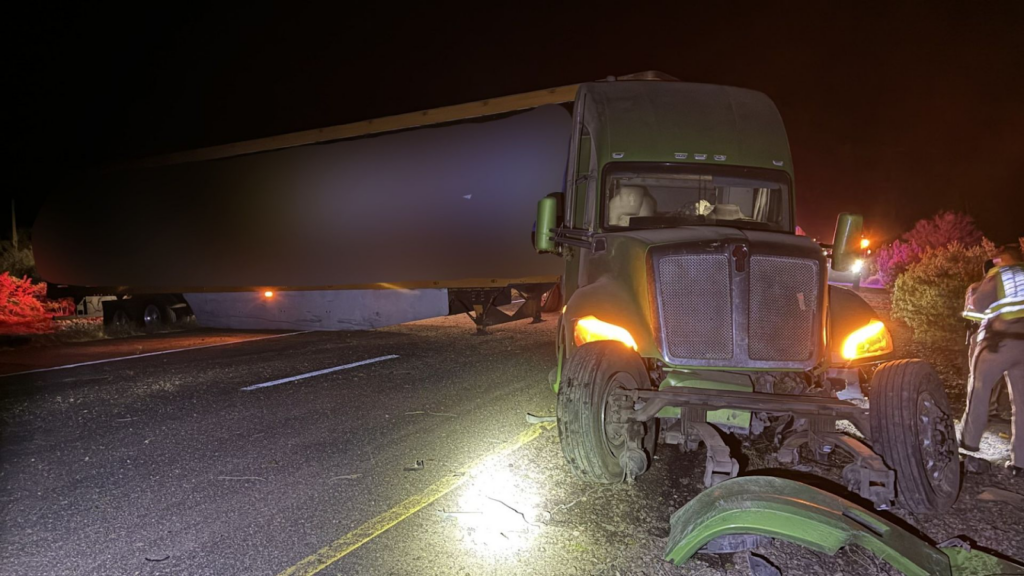
Fatigue-related accidents in the trucking sector are statistically more severe than those occurring in the daytime. At night, lower traffic density usually contributes to higher driving speeds, causing the increase of impact forces in the course of accidents. When lesser reactions combine with the above, the damage gets higher growth with longer downtime and bigger insurance claims.
Fatigue substance crash patterns during trucking include single run-off-road rear end yoke incidents, collision run-off-yard and lane-departure accidents. These accidents make it hard to explain the claim to the insurance consultants when fatigue is a general risk factor considered rather than a retailer of errors.
Fatigue-Driven Accident Patterns in Trucking
| Fatigue Factor | Operational Effect | Typical Accident Outcome |
| Slower reaction time | Late braking, missed hazards | Rear-end collisions |
| Micro-sleep episodes | Lane drift | Run-off-road crashes |
| Impaired judgment | Poor gap assessment | Side-impact accidents |
| Night visibility strain | Delayed hazard recognition | High-severity impacts |
For instance, completing a project and it costing one company that much is even a single fatigue-related crash could erase many months of profit. If it is a small fleet, for the company’s insurance coverage price tags, it could be even a life-long shift.
Insurance Rates, Premium Escalation, and Fatigue Exposure
Truck insurance rates are imo the issue of how predictable a road is. Fluctuations such as night shifts that nurses charts with the risk were aggressive at pricing. For firms with more night shifts, long hours, and poor fatigue controls their claims are statistically more likely to be triggered.
Fatigue affects the costs of insurance in various ways:
- Accident frequency has increased, although even minor ones might cause it.
- Insurance claims have higher severity due to night crash mechanisms.
- DOT and insurance audits have more scrutiny.
- Higher deductibles, coverage restrictions, or premium surcharges.
Once a driver becomes associated with incidents connected to fatigue, insurance expenses never recover as there is such a lag. The increased premiums can slow down the process which is why the refund usually comes months after the crash when the cost might already be high.
For transport companies, manual control of fatigue is therefore a cost management procedure as well as the labor orientation of action, and it must be treated as a form of workplace safety and employee safety, not merely a personal coping strategy.
The Hidden Operational Costs of Fatigue
Accidents are not the only thing that is visible. Night schedules hardly ever crash out from a full-day carry out as long as no collisions occur. Dehydration of the driver leads to more hard stops, judgement errors, idling and misrouting — the things that drive up operation costs.
Corrupted driving style causes the increase of repair costs because of aggressive maneuver corrections. The efficiency of using fuel falls as reaction-based driving replaces enjoyable travel. Driver retention goes through the floor as tired workers burn out faster, leading to the increased costs of recruitment and training, and reinforcing the spiral of reduced productivity across the fleet.
Operational Cost Impact of Chronic Fatigue
| Area Affected | Short-Term Impact | Long-Term Business Cost |
| Fuel usage | Inefficient throttle control | Higher cost per mile |
| Maintenance | Increased wear and tear | More frequent repairs |
| Productivity | Slower, inconsistent runs | Lower revenue efficiency |
| Driver retention | Burnout and turnover | Hiring and training costs |

In the long run, fatigue becomes a lost profit margin. While revenue might stay the same, costs gradually accumulate to the point that business becomes unprofitable. Many operators view this as “bad rates” or “market pressure,” while the actual issue is accumulated fatigue inefficiency.
Top 5 tips on how to stay alert as a truck driver while driving
Fatigue as a Workplace Safety and Risk Management Issue
The most effective trucking safety programs regard fatigue as a system issue that encompasses more than the operator. It is essential to plan shifts on purpose, build in rotation limits, set aside recovery windows, and have realistic expectations regarding the productivity results. When risk management is treated seriously, fatigue is managed like any other controllable exposure.
Operations that properly manage fatigue most typically achieve:
- Fewer accidents occur
- Insurance prices are more stable
- Better driver retention
- Equipment is going to last longer
Fatigue as a common issue oftentimes leads to reactive management as the primary change-driving force is accidents, audits, and premium hikes after the problems are done.
Night Schedules, Compliance Pressure, and Liability Exposure
Night schedules can never stand alone. In fact, they directly interact with the compliance systems, law enforcement patterns, and the likelihood of liability. In trucking, fatigue-related incidents often initiate a series of other troubles that extend well beyond the original accident or near-miss.
From a compliance angle, night work produces more hours-of-service borderline violations, incomplete logs, and record mismatches. Even though violations are minor, patterns associated with fatigue entice law enforcement and auditors to take a closer look.
Liability exposure surges more notable when fatigue is suspected. In investigations after accidents, night shifts too often become the target of scrutiny (alongside driver logs, dispatch records, and company scheduling practices). When fatigue can be linked to strategic decisions like a series of night shifts or unrealistic delivery windows, the fault moves from individual driver error to systemic management failure, which is why insurers increasingly examine fatigue controls as part of workplace safety enforcement.
Long-Term Health Risks and Their Economic Impact on Trucking Operations
Fatigue isn’t only an immediate safety risk but also a long-term health issue that has quantifiable economic effects. Chronic night work is associated with heart disease, metabolic problems, sleep problems, and mental stress, and these health risks accumulate gradually across years of shift work.
Fatigued workers are sick more frequently, are less able to give full attention at tasks, and experience more burnout. This is problematic in trucking, which relies on consistency and reliability; it creates a capacity gap and forces operations into reactive scheduling.
The health-related fatigue also comes back to the insurance systems. Medical claims, the fitness-for-duty issues, and the accident exposure increase both commercial and workers’ compensation profiles. Insurers bear in mind the health trends of drivers over a long-term period especially in relation to night work coverages.
Conclusion: Fatigue Is a Cost You Either Control or Pay
In truck driving, fatigue is inevitable but uncontrollable fatigue is very costly. The night schedules not only add the cost of the accidents but also the insurance premiums as well as the operational inefficiencies that they cause. The cost of fatigue is cumulative and postponement, which is why it’s especially dangerous for owner-operators and small fleets.
Tackling fatigue as a controllable financial variable alongside fuel, maintenance, and insurance is the key to long-term good health. The operations which honored the limits of human performance not only safeguard the drivers’ lives but their profit also, while also reducing exposure to safety issues linked to drowsy driving and chronic sleep deprivation.
Ultimately, it is not about working less, managing fatigue means working sustainably, decreasing avoidable losses, and maintaining insurance costs, accident exposure, and business risks at a controlled level in an industry where margins are already thin.