
The move to an owner-operator, from a company driver, is a critical point in a truck driving career. It is viewed as a promotion most of the time, but in fact, it is a complete transformation of the game rules: the way the money is earned, the risks involved, and the decision-making power. This is not just about changing trucking routes — it’s a matter of going from employment to self-employment trucking, where you practically own a small business trucking operation.
Drivers on the regional route often find the structure and predictability more suitable than owner-operator which is autonomous, returns higher earnings, and provides direct exposure to market forces. To know the exact moment when shifting to owner-operator is really worth it, you must not only look at the cold figures like owner operator salary, but also assess your operational readiness, cost structure, and your own willingness to deal with the volatility. In effect, the question is not “Can I do it?” but rather “Am I making the most rational choice by becoming an owner-operator at this moment?”
1. Regional Routes as a Strategic Career Stage
In some contexts, regional routes are seen as a downfall, yet at times they can be the most efficient training ground out there. Shorter stretches, known highways, reliable partners, and constant schedules provided by regional driving help drivers to get rid of bad habits without being too confused.
Conversely, regional driving from a business standpoint is a less risky option: you predict fuel usage more easily, maintenance is typically steadier, and the carrier usually absorbs most operational expenses.
This is where the regional driver situation gets better. Stability implies that you learn the complete process of the dispatcher and shipper mechanisms, what lead time is for, and how the effects of time dilatation create a stack of unsettled bills.
Yet, there is a ceiling built into regional routes too. In the end, the gains from fuel burn optimization, time management tightening, or inline CPM boosts over the time are not substantial enough to create meaningful income growth.
This is where the regional vs owner-operator comparison becomes relevant. The difference does not seem to be about the skill. The regional driver is compensated for his labor. An owner-operator is paid for the capital he has at risk and he is the one making decisions. At this point, the transition to owner-operator often marks a deeper truck driver change, where effort no longer directly correlates with income.
2. The Financial Reality of the Owner-Operator Switch
The income flow method shift that comes with the owner-operator switch is a significant departure from the former process. The net income may witness a rise but the responsibility of management will have to be taken on by you.
Owner-operator income isn’t a “salary” the same way it is business revenue minus operational costs. Fuel, insurance, maintenance, tyres, permits, compliance, and downtime are no longer background noise — they become direct financial variables you must manage.
Many drivers see advertised owner-operator numbers with their eyes and perceive the gap between a regional pay and starting an owner-operator as a given factor. But a semi truck owner-operator can earn gross revenue of $7,000 a week and yet perceive it as failure if his cost structure were weak or cash flow the other way round.
This reality is more obvious in lease purchase conditions, where fixed obligations could play an important role in extracting margins and the flexibility to do it goes. Lease purchase is a stepping-stone and not a shortcut at the same time.
Regional vs Owner-Operator: Income Structure Comparison
| Aspect | Regional Company Driver | Owner-Operator |
| Income type | Fixed CPM or salary | Gross revenue minus expenses |
| Fuel cost | Covered by carrier | Fully out-of-pocket |
| Maintenance | Scheduled, predictable | Unplanned, cash-sensitive |
| Risk exposure | Limited | Direct and ongoing |
| Upside potential | Capped | Variable but scalable |
| Cash flow volatility | Low | High without reserves |
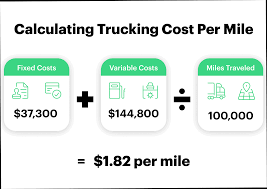
For that reason, trucking profitability matters more than gross revenue. Independent operators who track their cost per mile, understand their cash-flow timing, and maintain their reserves are far more likely to find the stability they seek.
A hindrance to profit can occur in a single day of down, in one major repair, or a week of the freight being weak unless the financials are set up properly.
3. Operational Readiness — Where Most Transitions Fail
Most unsuccessful transitions have little to do with driving skills or lack of freight; rather they stem from operational failures. Drivers who operate regionally, do so in systems which are managed by others.
Dispatching, compliance programming, routing, negotiating or picking loads is often arranged by someone else. Thus, the moment you become an independent contractor, all of that comes to you.
Operational readiness means knowing about hauling more than just the mileage. It contains inserting times such as when to sit, when to run, how to price your time, and how to carry maintenance tasks without putting your cash flow at risk.
Errors in the long-haul trucking processes lead to that much quicker, but even regional owner-operators experience the pressure when planning errors accumulate. That’s the reason switch timing is critical. The evolutionary shift in logic happens when operational thinking is normalized — it is not overbearing.
4. Lifestyle and Risk — the Real Regional vs Owner-Operator Trade-Off
Apart from financial transactions, the transfer has an impact on daily life as well. Regional routes offer a mechanism of routine: expected home time, familiar shippers, and reduced exposure to risk.
Owner-operators, on the other hand, have the freedom of choice, but at the same time, they are exposed to the risk. Independent trucking is not about to let you rest. Fuel stops, accepting loads, maintenance delays, route choices all have financial implications.
Autonomy may be the energizing factor for some drivers. Conversely, it can be a source of fatigue and burnout for others. Truck owner-operator benefits only matter when the responsibility aligns with your temperament and lifestyle priorities.
These paths represent different truck driving segments, not a linear career ladder.
5. Freight Options and Market Conditions
Freight options overall are more of an issue for owner-operators than they are for company drivers as they directly affect the profit margin.
Timing of the freight market is of considerable importance. If you start your business in the time of a strong market with little-capacity, you get an extra leeway to make some early errors and to recoup your learning costs.
A truck that is dependent on just one customer or a single lane is much less safe than a truck that can adjust to different shippers and routes.
6. Owner-Operator Economics as a Small Business
From the point of view of transition, trucking turns from “a job with miles” and becomes business management.
Independent trucking requires systems:
- budgeting discipline,
- maintenance planning,
- reserve management,
- freight selection rules.
Income volatility becomes a normal operating condition rather than an emergency — but only if you are prepared for it.
Successful owner-operators think in margins, not miles. They understand that profitability often comes from cost control more than from running harder. Over time that stabilizing mindset strengthens owner-operator income and supports sustainable growth.
7. A Practical Decision Framework
Before drivers make a trucking career change, experienced drivers usually employ a simple checklist to stress test their readiness.
A practical readiness checklist may include:
- Stable cost-per-mile calculations based on real data
- Emergency cash reserves for downtime and repairs
- Understanding of freight pricing and lane selection
- Comfort with income volatility
- Willingness to manage compliance and paperwork
The actual question is not whether you will be able to make more than your owner-operator salary expectations suggest. It goes:
Am I really prepared to run my own trucking business, and is this the right timing for my life and market conditions?
Final Reflections – Deliberately Making the Switch
The change from regional driving to ownership is neither a passage that every driver must go through nor a guaranteed upgrade. Only when everything, such as the right preparation, the right timing, and the right expectations, comes together, it is a strategic choice that makes sense. For some drivers, regional routes can offer a stable, satisfying career over many years, particularly for those who appreciate predictability and low-risk situations.
The owner-operator’s shift in working from driving performance to dealing with business. Thus, the success in the long run will be determined not by the number of miles driven, but by understanding, planning, and managing the owner-operator costs well. Drivers who look at those costs as fixed realities and do not consider them to be surprises are mostly successful to have them in the long run and avoid the early burnout.
The careful approach to transition—when it’s neither emotional nor obligatory—turns it from the gamble to the calculated move into entrepreneurship.
FAQ
When is it usually acceptable for a driver to switch from regional routes to owner-operator?
The switch is usually the best choice when the income is stable on regional routes, operational decisions have been made with confidence, and the driver is able to carnage with financial risks without stress.
Is owner-operator income always better than regional pay?
Not necessarily. The owner-operator could earn more than the regional rate but only when he controls costs, downtime, and cash flow carefully. The increase in gross revenue does not assure the driver of higher take-home pay.
What is the commonest error that drivers produce while changing to the owner-operator mode?
The most frequent error is misjudging owner-operator costs and high initial profitability. Many operators target revenue while they overlook the speed of expenses erosion.
Is the market timing too critical for the newcomer owner operator?
At times, market timing is very consequential. Launching in a robust freight market offers a chance to learn and make mistakes while unfavorable markets leave little margin for recovery.
Can a driver be back on a regional route after being an operator?
Yes. Many drivers go between sectors as part of their careers. Going back to the regional routes is a strategy reset and not a failure; it could be depending on individual conditions and the market state.